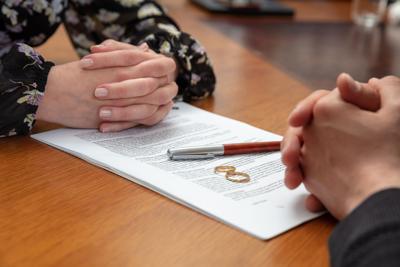


Signing a divorce, marriage dissolution documents and agreement. Wife and husband hands, wedding rings and legal papers for signature on a wooden table, lawyer office
When a person suffers a serious injury, the entire course of their life may change. The financial impact of an injury can be massive, since medical bills can quickly pile up, and a family may struggle to pay ongoing expenses when a person is unable to work. The daily routines of an injury victim and their family members may undergo massive changes over months or years of treatment and recovery. Adjusting to these changes may not be easy, and in some cases, it can lead to relationship strife that could eventually result in divorce.
The losses and damages a person has suffered because of an injury may be addressed through a personal injury claim. A settlement can provide financial relief and help a family maintain stability. However, in a situation where a couple chooses to get a divorce after receiving a settlement, questions may arise about whether the amount received may be divided between spouses and how other financial concerns will be handled.
People are also reading…
The answers in these cases are rarely simple. Courts may look at what the settlement was intended to address, when it was received, and how the funds were used during the couple’s marriage. They may consider whether ongoing support will be needed and how to protect the financial interests of both parties. Understanding the factors that can play a role in these cases can help people determine the best steps they can take as they proceed with a divorce.
What Does a Personal Injury Settlement Cover?
A person who files a personal injury claim may receive compensation that can address multiple types of losses, which may include:
Medical Expenses: The past and future costs required for medical treatment, surgeries, rehabilitation, medication, and other expenses related to care for an injury may be covered in a settlement.
- Lost Wages: A person may be compensated for the income they were unable to earn while recovering from an injury, as well as any reduction in their future earning capacity.
- Pain and Suffering: A settlement can compensate a person for the personal effects of an injury, including physical pain and discomfort and emotional trauma.
- Loss of Consortium: In some cases, a settlement may address the impact that an injury has had on an injured person's relationship with their spouse.
A settlement can give an injured person and their family the resources needed to provide ongoing medical care, replace lost income, and address other losses. When a person has suffered an injury that will have a long-term or permanent effect on their life, a settlement may address years of anticipated medical costs and living expenses, as well as the personal impact on a person and their family. In some cases, a settlement may be as high as several million dollars.
Are Personal Injury Settlements Considered Marital Property or Separate Property?
When dividing assets during a divorce, courts will distinguish between marital property, which will be divided between spouses, and separate property, which usually belongs to one spouse. Personal injury settlements can fall into a gray area, because they may provide compensation for several types of losses, some of which may be more closely tied to one spouse rather than to a couple.
Compensation Addressing the Needs of the Injured Spouse
Money awarded to address an injury victim’s unique needs may be considered separate property rather than marital property. When compensation is used to cover a person’s medical expenses and personal care, the injury victim may be able to keep that portion of a settlement so that they will be able to receive ongoing treatment and address other needs.
Compensation Related to a Couple’s Marriage
Compensation for lost wages or other issues that may affect an entire family may be considered marital property. The portion of a settlement used to address a family’s ongoing needs may need to be divided between spouses during a divorce. If settlement funds were mixed with marital funds in a bank account controlled by both spouses or used to cover shared household expenses, courts may find that the funds have been commingled with marital assets, and these funds may be subject to division.
Issues Related to Personal Injury Settlements That May Need to Be Addressed in a Divorce
Determining how to divide marital assets and address other financial concerns related to personal injury settlements may involve some complex considerations. These may include:
Identifying the Purpose of Funds in a Settlement
Settlement agreements do not always break down compensation by category. A person may receive a lump sum that is intended to address a variety of damages. To determine how the funds in a settlement were used, it may be necessary to review the details of a personal injury case to determine how much of the award was meant to cover different types of damages.
Courts may examine bank statements and financial records to determine whether a settlement was kept separate or mixed with marital assets. Funds kept in an individual account or trust that had not been used for general family expenses may be treated as separate property rather than marital property.
Meeting the Ongoing Needs of the Injury Victim
When considering divorce-related issues, courts are likely to recognize that an injured spouse will have continuing medical needs and may not be able to earn enough income on their own to support themselves. A personal injury settlement and other marital property may be divided in a way that will ensure that an injury victim will have the resources needed to cover their ongoing expenses.
In some cases, ongoing financial support may be necessary to ensure that a spouse will be able to meet their needs. During the divorce process, a court may consider the following issues when determining how support should be handled:
- Spousal Support: If necessary, a court may order one spouse to make ongoing payments to the other to ensure that they can maintain financial stability after the divorce. In some cases, an injury victim may receive ongoing support if the amount of a settlement awarded to them will not fully meet their needs.
- Child Support: When a couple has children, arrangements will need to be made to ensure that both parents are contributing to their financial needs. A parent may be required to use the funds in a settlement or other financial resources to pay child support, or they may receive child support payments if children will be living with them for the majority of the time.
- Health Insurance Considerations: Steps may need to be taken to ensure that an injury victim will be able to maintain health insurance coverage. A couple may also need to determine how to provide coverage for their children going forward.
- Division of Other Marital Assets: Retirement accounts, real estate property, or other assets may be divided in a way that will provide for the ongoing needs of an injury victim.
Legal Help with Personal Injury Settlements and Divorce
When a divorce involves a spouse who has received a personal injury settlement, a careful analysis of financial records, medical documentation, and other factors will often be necessary to ensure that property division and other financial issues will be handled correctly. An experienced attorney can take steps to determine whether funds received from a settlement may be considered separate property or marital property, and they can provide guidance on how to resolve potential disputes and find solutions that will provide for an injury victim’s ongoing needs.