


What to know about Our MHC community conversations
What: Our MHC focus groups brought together Martinsville-Henry County residents with different experiences and perspectives.
Why: The conversations explored themes that emerged during the first phase of community engagement and how they affect residents’ lives.
What emerged: The conversations explored how issues and opportunities across MHC are often interconnected.
What’s next: The focus groups are part of Our MHC Vision 2050, a 25-year vision for Martinsville-Henry County. Residents can join the conversation online or in person.
People are also reading…
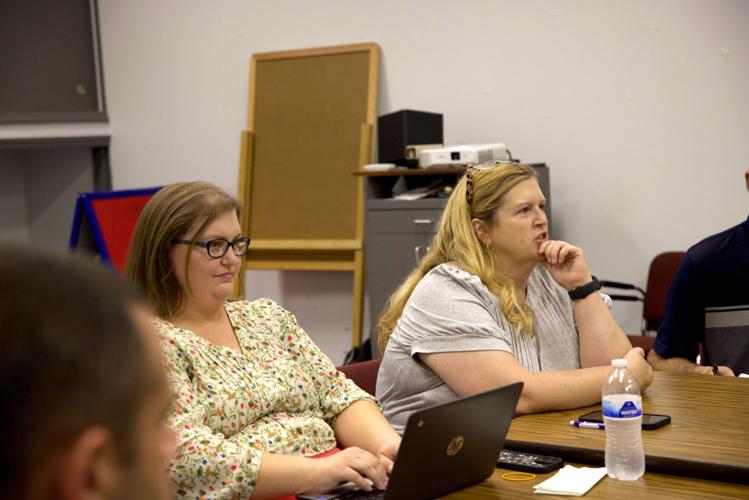
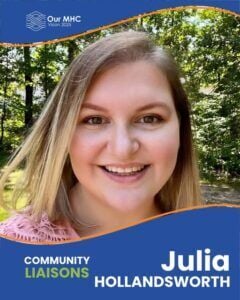
As part of the community visioning process in summer 2026, residents from across Martinsville-Henry County participated in focus groups exploring themes that emerged during the first phase of community engagement. Community liaison Julia Hollandsworth participated in three of those Our MHC community conversations. Here she shares what she heard, what surprised her and how the conversations changed the way she thinks about the community she calls home.
At the same table: What I learned from Our MHC focus groups
By Julia Hollandsworth, community liaison
Before we ever sat down for the focus groups, we had already spent hours and hours out in Martinsville and Henry County talking to people.
Through the first phase of the Our MHC Vision 2050 community engagement process, we went to events and different places throughout the community and asked people what they thought about living here:
- What they loved.
- What they worried about.
- What they wished we had.
- What they wanted this community to look like in the future.
After gathering all of that information, some themes kept rising to the surface. But identifying a theme and really understanding it are two different things.
That is where the focus groups came in.
Bringing different perspectives to the table
We needed to dig deeper. How did these issues affect people’s lives? How did they connect to one another?
After all, very little in a community happens in isolation. Transportation affects access to jobs. Jobs affect housing. Housing affects families. Opportunities can depend on everything from income and geography to whether someone knows a resource exists in the first place.
So, small groups of people with different experiences and perspectives were brought together to really explore some of those themes. In one group, for example, we had teenagers, parents, educators and other community members sitting around the same table. That range of perspectives was intentional. We were not looking for eight people who would give us the same answer. We wanted to see as many sides of an issue as we could.
As a community liaison, I only needed to participate in one focus group, but I participated in three. Honestly, I would have participated in all of them if I had had the opportunity.
Part of that is simply who I am. I love connecting with people, but I am equally interested in understanding them. These conversations were fascinating. I got to sit down with people I already knew, meet people I did not, and hear people describe the same community I experience every day from perspectives completely different from my own.
Why listening to MHC matters to me
There is something more personal behind my interest in this work too. I live here. I am raising my children here.
When we talk about creating a 25-year vision for Martinsville and Henry County, it can sound abstract, but it is not abstract to me. Twenty-five years from now, my children will be adults. I may have grandchildren growing up here. I will still be living with the consequences of the decisions we are making today.
I want to be able to look around and know that I helped make this place better for them and for the people who will call MHC home long after this particular community engagement process is over.
So I wanted to listen.
What we heard around the table
Once we started listening, one thing became clear pretty quickly: People were eager to be heard.
These were not always easy conversations. All three of the focus groups I participated in touched on difficult things because Martinsville and Henry County have been through difficult things. But the conversations were not bleak.
There was laughter. There was excitement when people talked about things that are working. People built on each other’s ideas. Someone would bring up an experience, and another person would recognize something from their own life in it.
Sometimes a different perspective complicated an issue we thought we understood. And sometimes we discovered just how disconnected our experiences of the same community can be.
One moment from the focus groups has really stuck with me.
Someone brought up an idea they had seen in another community — something designed to make it easier for people to know what was happening around them and connect with local resources. I thought it was brilliant. So did several other people.
Then in another conversation, I brought the idea up again.
Apparently, we already have it. I cannot adequately describe how surprised I was.
And I was not the only one. Several of us sitting there are deeply involved in this community. We work with local organizations. We attend the events. We know the people. Some of us have literally spent years connecting residents with community resources.
And we looked at each other like, “Wait. What do you mean we already have this?”
That was such a small moment in hours of conversation, but I think it perfectly illustrates something much bigger.
When opportunities and people do not connect
Martinsville-Henry County has a connection problem.
I do not mean that as a criticism of any one organization, program or person. Our community is full of good people doing good things, but sometimes those good things exist right alongside the people who need or want them without the two ever finding each other.
Because an opportunity is not really an opportunity if the people who could benefit from it do not know it exists.
Once I started looking at the focus group conversations through that lens, I saw it everywhere. The three groups I participated in covered very different pieces of life in Martinsville and Henry County, but the longer we talked, the harder it became to separate one issue neatly from another.
Housing led to jobs. Jobs led somewhere else. Conversations about opportunities inevitably raised questions about who knew about them and who could actually access them. We may have entered the room to talk about one topic, but real life kept spilling over the edges.
Everything kept connecting back to everything else.
The more I thought about it, the more I realized that connection is not just about communication. Sometimes it is knowing something exists. Sometimes it is transportation, cost or geography. Sometimes it is having somewhere to go. And sometimes connection is a person.
We heard stories about programs, sports, educational opportunities, mentors and other experiences that had opened doors in people’s lives — sometimes changing what they believed was possible for themselves. We also talked about the barriers that can keep those same opportunities out of reach.
That is one of the contradictions I kept coming back to. Martinsville-Henry County has a lot going on. We have people doing wonderful work all over MHC who genuinely care about making this a better place.
And yet we still hear people say, “There is nothing here.”
Maybe both things can be true.
Creating more ways to connect
There are absolutely things I would love to see us add to Martinsville and Henry County. More recreational amenities. More things for kids and families to do. But I also find myself thinking about something even more basic: Where do people go just to be together?
Recently I took my children to a park in another community. It was beautiful. There were places to play, comfortable places to sit, green space, a small splash pad and the river running alongside it. Restaurants were within walking distance. We could have stayed for hours. And people did.
We have beautiful parks here too, but there was something about the way this space worked that made people want to stay. Nobody needed to register for anything or spend money to have a reason to be there. People could just be there.
Of course, it was also a beautiful August evening. What about when the weather does not cooperate? We need beautiful indoor spaces that invite that same kind of connection too.
Years ago, a coworker and I ran into this in the simplest possible way. We wanted to bring our lunches instead of eating out, but if we wanted to leave the office and sit somewhere together, where were we supposed to go?
I remember thinking then that what we needed was a break room for the community — somewhere you could go simply because you wanted to get out of the house or the office and see other people without having to spend money, register for something or have any particular reason to be there.
And that is just one of the thoughts these conversations sparked for me. They made me think differently about the community I already live in.
Having something and being connected to it are not the same thing.
That brings me back to a word I chose during one of our focus groups. We were asked to give one word describing the future we hoped young people would have in Martinsville and Henry County.
Mine was connection.
At the time, I was thinking mostly about relationships. The mentors, teachers, coaches, neighbors and friends who help us find our place in a community.
By the time I left these conversations, that word had gotten much bigger. Connection to people, information, resources and opportunities. Connection between organizations and different parts of our community. And simply having places where people can connect with one another.
That last one stayed with me.
Building on where we have been
For decades the story of Martinsville and Henry County has been inseparable from what happened when the factories closed. People still talk about what it used to be like when you could leave one job and have another one ten minutes later. This was a bustling area, full of industry that supported generations of families.
And then so much of it disappeared.
Sometimes I think of it like a forest after a devastating fire. For a long time, it was easy to look around and see what had burned.
But sitting in these focus groups and listening to people talk about this community, I kept noticing something else.
There is new growth pushing through the ashes. There are new opportunities. There are people trying things, investing in this community and working to make it better. There are people who stayed and kept building and people who left and came back. There is still a tremendous amount of work to do, but there is also a lot here worth cultivating.
And as we cultivate that new growth, I think it is important that we honor what came before it. There are people here who remember those factories running, families whose lives were built around them and generations of people who have called this place home. Moving forward does not have to mean leaving that history behind. It means carrying the best of it with us as we decide what comes next.
Maybe that is part of what the next 25 years are about: honoring where we have been while recognizing what is already growing, helping it thrive and figuring out what else needs to be planted.
In a way that is exactly what the focus groups did. People with different lives and different experiences sat around the same table and talked about the same place.
We did not always have the same answers. Sometimes we did not even know the same things.
But perhaps that is exactly why we needed to be sitting at the same table.
Help us make the connections
Julia’s experience in the focus groups showed how much we can learn when people share their experiences, ideas and hopes for Martinsville-Henry County. Now we want to hear from even more people across MHC.
The Our MHC: Vision 2050 community survey is your opportunity to share what matters to you. Tell us what you value about life in MHC today, what could be better and what you want for our community’s future. Your input will help shape a shared vision and plan.
The survey takes about 15 minutes, and every member of your household can participate, regardless of age. After completing the survey, MHC residents can enter for a chance to win one of 10 $100 Visa gift cards.


